.png)


.png)


An Expert Guide to What is Steel Wire Rope: 5 Core Factors for Industrial Lifting in 2026
December 31, 2025




Abstract
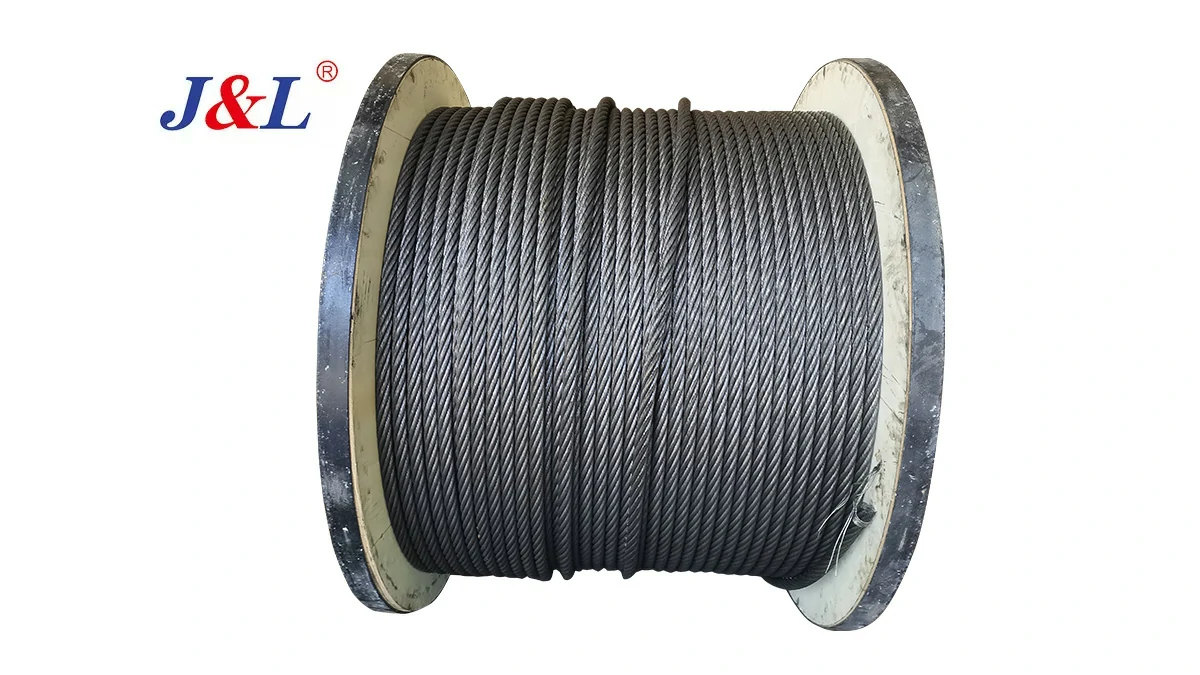
A steel wire rope represents a complex machine, engineered from individual steel wires spun into strands, which are then helically laid around a central core. Its design provides a unique combination of strength, flexibility, and resistance to abrasion, making it an indispensable component in global industries such as construction, maritime, mining, and energy. The performance and safety of a steel wire rope are dictated by a synergy of factors, including the grade of steel, the type of core (fiber or independent wire rope core), the construction of the strands, and the direction and type of lay. Understanding these fundamental characteristics is paramount for engineers, riggers, and safety professionals. Proper selection based on the specific application's demands—such as load capacity, environmental conditions, and bending fatigue—is directly linked to operational efficiency and the prevention of catastrophic failures. Adherence to rigorous inspection protocols and maintenance schedules, as outlined by bodies like OSHA and ASME, is not merely a recommendation but a foundational requirement for ensuring the longevity of the rope and the safety of all personnel.
Key Takeaways
- Choose a core based on the need for either flexibility (Fiber Core) or crush resistance (IWRC).
- Match the lay type (Lang or Regular) to the rope's movement and abrasion resistance requirements.
- Verify the steel grade (e.g., EIPS, EEIPS) meets the required breaking strength for the load.
- Regularly inspect your steel wire rope for broken wires, corrosion, and deformation to ensure safety.
- Always use padding to protect slings from sharp corners on loads to prevent premature failure.
- Ensure the D/d ratio is adequate to prevent excessive bending stress and fatigue.
- Consult manufacturer specifications for use in extreme temperatures or chemical environments.
Table of Contents
- Understanding the Fundamental Anatomy of a Steel Wire Rope
- Decoding the Language of Lays and Constructions
- Material Science and Grades: The Basis of Strength and Durability
- Application-Specific Selection: Matching the Rope to the Task
- The Imperative of Inspection and Maintenance for Safety
- Frequently Asked Questions (FAQ)
- Conclusion
- References
Understanding the Fundamental Anatomy of a Steel Wire Rope
To truly grasp what a steel wire rope is, one must move beyond the simple image of a twisted metal cable. It is more accurate to think of it as a sophisticated mechanical device, or even a machine, composed of many moving parts designed to work in concert. Each component is meticulously engineered and assembled to achieve a balance of strength and flexibility. The failure to appreciate this complexity is often where safety risks begin. Let us dissect this machine, piece by piece, to build a foundational understanding.
The Individual Wires: The Building Blocks of Strength
At the very heart of the rope are its wires. These are single, continuous filaments of cold-drawn, high-carbon steel. The process of drawing the steel through successively smaller dies not only shapes the wire but also fundamentally alters its grain structure, imparting immense tensile strength. Imagine stretching a piece of soft clay; as you pull it, it becomes thinner and longer. A similar, but far more controlled, process gives steel wires their remarkable ability to resist being pulled apart.
The diameter of these individual wires is a critical design choice.
- Finer Wires: Ropes made of many fine wires are more flexible and resistant to fatigue from bending. Think of how a thick, single-strand electrical wire is stiff, while a wire made of many tiny copper strands is supple. This makes them ideal for applications involving frequent bending over sheaves and pulleys, such as on cranes.
- Coarser Wires: Ropes constructed from fewer, larger wires offer superior resistance to abrasion and corrosion. The thicker wires present a more robust surface to the outside world, making them suitable for applications where the rope might be dragged or exposed to rough surfaces, like in logging or some types of rigging.
The Strands: The First Level of Organization
Individual wires are rarely used alone. Instead, they are helically twisted together to form a strand. Most commonly, you will see strands with 7, 19, or 37 wires, but many other configurations exist. This twisting is not arbitrary; it is the first step in creating the rope's flexible, load-distributing structure. When a load is applied, the helical shape of the wires within the strand allows for minute adjustments, ensuring the stress is shared among them rather than being concentrated on just a few. This prevents a single point of failure and gives the rope its resilience. The strand is the fundamental unit that is then used to construct the final rope.
The Core: The Heart and Soul of the Rope
The strands are then helically laid around a central core. The core is arguably the most defining feature of a steel wire rope, as it dictates many of its primary performance characteristics. It serves two main purposes: to provide foundational support for the outer strands, maintaining their position and preventing the rope from crushing under pressure, and to hold a reserve of lubricant. There are two principal categories of cores.
-
Fiber Core (FC): This core is made from natural fibers like sisal or synthetic fibers like polypropylene. The primary advantage of a fiber core is flexibility. The soft core allows the rope to bend more easily, making it a good choice for applications where it doesn't have to support heavy loads or resist crushing. However, its softness is also its weakness. Under high pressure, such as when wound in multiple layers on a winch drum, a fiber core can be crushed, leading to the collapse of the rope's structure. It is also more susceptible to degradation in high-temperature or chemical environments.
-
Independent Wire Rope Core (IWRC): As the name suggests, this core is a smaller, separate steel wire rope in its own right, around which the main strands are laid. This "rope-within-a-rope" design provides outstanding structural support and crush resistance. Ropes with an IWRC can withstand the immense pressures of being spooled onto a drum and are the standard for most heavy lifting applications, especially in crane operations. The IWRC also contributes to the rope's overall strength, typically adding about 7.5% to its breaking force compared to a fiber core equivalent.
| Feature | Independent Wire Rope Core (IWRC) | Fiber Core (FC) |
|---|---|---|
| Material | Separate, smaller steel wire rope | Natural (sisal) or synthetic (polypropylene) fibers |
| Crush Resistance | Excellent; ideal for multi-layer spooling on drums | Poor; susceptible to crushing under high pressure |
| Strength | Contributes to the rope's overall breaking strength | Does not add significant strength |
| Flexibility | Less flexible | More flexible |
| Heat Resistance | High | Low; can be damaged by high temperatures |
| Primary Use Case | Crane hoisting, elevators, heavy-duty lifting | General-purpose rigging, applications requiring flexibility |
Lubrication: The Lifeblood of the Rope
A new steel wire rope is not dry. It is permeated with a specialized lubricant applied during the manufacturing process. This is not just for surface-level corrosion protection. As the rope bends and flexes under load, its hundreds or thousands of individual wires rub against one another. Without lubrication, this internal friction would cause rapid wear and heat buildup, leading to premature failure from the inside out. The lubricant reduces this friction, allowing the wires to move smoothly. The core, especially a fiber core, acts as a reservoir, storing lubricant and gradually releasing it to the surrounding strands throughout the rope's service life. Proper relubrication in the field is a critical maintenance task to replenish this internal supply.
Decoding the Language of Lays and Constructions
The way the wires are twisted into strands and the strands are twisted around the core is known as the rope's "lay." This is a crucial part of the design specification and has a profound impact on the rope's handling characteristics, wear resistance, and suitability for a given task. Understanding the terminology of lays is like learning the grammar of steel wire rope.
Lay Direction: Right Hand vs. Left Hand
This is the simplest concept. It refers to the direction in which the strands are laid around the core. When you look down the length of the rope, if the strands appear to spiral away from you to the right (like the threads of a standard screw), it is a Right Hand Lay. If they spiral to the left, it is a Left Hand Lay. Right Hand Lay is the most common and is considered the standard for most general-purpose ropes. Left Hand Lay is typically used for specialized applications, such as in pairs on certain crane systems to counteract rotational forces.
Regular Lay vs. Lang Lay: A Critical Distinction
This is one of the most important concepts to grasp when selecting a rope. It describes the relationship between the direction the wires are laid in the strand and the direction the strands are laid around the core.
-
Regular Lay (or Ordinary Lay): The wires in the strand are twisted in one direction, and the strands are laid around the core in the opposite direction. Imagine the wires go left, and the strands go right. This opposition creates a balance of forces, making the rope stable, easy to handle, and highly resistant to kinking and crushing. The downside is that the outer wires present themselves at a steep angle to the rope's axis, exposing only small sections to external wear. This means abrasion is concentrated, and wear can be more rapid.
-
Lang Lay: The wires in the strand and the strands around the core are laid in the same direction. Imagine both the wires and the strands spiral to the right. This parallel arrangement exposes a much longer length of each outer wire to the surface. The result is a rope with exceptional resistance to abrasion and fatigue. The wear is distributed over a larger area, significantly increasing the rope's service life in high-friction applications. However, this construction makes the rope less stable. Lang lay ropes have a strong tendency to untwist under load and are far more susceptible to kinking and damage from improper handling. They should only be used in applications where both ends of the rope are fixed and cannot rotate, such as on many crane hoists.
| Feature | Regular Lay | Lang Lay |
|---|---|---|
| Construction | Wires and strands are laid in opposite directions. | Wires and strands are laid in the same direction. |
| Abrasion Resistance | Good; outer wires wear more quickly. | Excellent; wear is distributed over a longer wire surface. |
| Fatigue Resistance | Good | Excellent; ideal for bending over sheaves. |
| Crush Resistance | Excellent | Good |
| Stability / Kink Resistance | Excellent; very stable and easy to handle. | Poor; has a strong tendency to untwist and kink. |
| Typical Application | General rigging, slings, stationary applications. | Hoist ropes for cranes, excavators (where rotation is prevented). |
Common Constructions: The Rope's Fingerprint
The construction of a steel wire rope is its numerical signature, typically written as "Number of Strands x Number of Wires per Strand." For example, a 6×19 construction has 6 strands, with each strand being made of approximately 19 wires. This designation often includes a classification that groups together ropes with similar characteristics.
-
6×19 Classification: This is a workhorse group known for its good balance of abrasion resistance and flexibility. The strands might actually have between 16 and 26 wires, but they offer similar performance. It is a very common choice for general-purpose rigging and many crane applications.
-
6×37 Classification: This group of ropes contains strands with more, and therefore finer, wires (typically 27 to 49 each). The increased number of wires gives the rope excellent flexibility and fatigue resistance. This makes it a superior choice for applications that involve a lot of bending over small-diameter sheaves, such as on many modern mobile and tower cranes. The trade-off is that the finer wires offer less resistance to abrasion.
Understanding these constructions allows you to select from a vast catalog of premium steel wire rope slings and components to find the one with the precise balance of properties your job requires.
Material Science and Grades: The Basis of Strength and Durability
The mechanical properties of a steel wire rope are ultimately determined by the material it is made from and how that material is treated. The grade of the steel and its protective finish are non-negotiable factors when it comes to ensuring a rope can safely handle its intended load over its expected service life.
Steel Grades and Breaking Strength
The "grade" of a wire rope refers to the nominal strength of the steel used to make its wires. This is directly related to its minimum breaking strength—the force at which the rope is expected to fail. Over the years, advancements in metallurgy have led to stronger steels. You will most often encounter the following grades, standardized by ASTM (American Society for Testing and Materials):
- Improved Plow Steel (IPS): For many years, this was the standard grade for lifting and rigging.
- Extra Improved Plow Steel (EIPS): This grade is approximately 15% stronger than IPS. Today, EIPS is widely considered the standard grade for a broad range of industrial applications, offering a great combination of strength and reliability.
- Extra Extra Improved Plow Steel (EEIPS): As the name implies, EEIPS is another step up in strength, being about 10% stronger than EIPS. This higher strength allows for the use of a smaller diameter rope to lift the same load, which can be advantageous in applications where space or weight are concerns.
When a manufacturer lists a rope's rated capacity or Working Load Limit (WLL), that value is derived from the minimum breaking strength, divided by a design factor (or safety factor). The design factor for lifting slings is typically 5:1, meaning the WLL is only 20% of the rope's breaking strength. This large margin accounts for dynamic forces, wear, and unforeseen conditions.
Finishes: Protection Against the Elements
A steel wire rope is, at its core, iron. And iron rusts. The finish applied to the wires is the first line of defense against corrosion, which can rapidly degrade a rope's strength.
-
Bright (or Uncoated): This is the most basic finish. The wires have no protective coating other than the lubricant applied during manufacturing. Bright ropes are suitable for indoor or dry environments where corrosion is not a major concern. They are the most economical option.
-
Galvanized: In this process, the wires are coated with a layer of zinc. The zinc acts as a sacrificial anode, corroding first to protect the steel underneath. This makes galvanized ropes highly resistant to moisture and saltwater, making them the standard choice for marine, offshore, and outdoor construction applications. There are different classes of galvanization, with higher classes offering a thicker zinc coating and longer-lasting protection.
-
Stainless Steel: For the most extreme corrosive environments, such as in chemical plants or certain food processing facilities, stainless steel wire ropes are used. They are made from steel alloys containing chromium and nickel, which provide inherent corrosion resistance throughout the material, not just on the surface. While they offer the ultimate protection, stainless steel ropes are significantly more expensive and generally have a lower breaking strength than their carbon steel counterparts of the same size.
Environmental Effects on Performance
The operational environment can have a profound effect on a rope's safety and longevity. Operators must consider these factors during selection and use.
-
Temperature: Extreme temperatures can compromise a rope's integrity. According to the Occupational Safety and Health Administration (OSHA), fiber core ropes should be removed from service if exposed to temperatures above 180°F (82°C), as the core can dry out and degrade (OSHA, n.d.-b). Ropes with steel cores (IWRC) can operate at much higher temperatures, but their strength begins to be derated above 400°F (204°C). Conversely, extreme cold can make the steel brittle. Manufacturers should be consulted for use below -40°F (-40°C) (OSHA, n.d.-a).
-
Chemical Exposure: Aggressive chemical environments can attack both the steel wires and the core material. Acids can cause embrittlement in steel, while caustics can degrade fiber cores. It is imperative to consult the rope manufacturer's chemical compatibility charts before using a rope in any environment where chemical fumes, mists, or liquids are present (OSHA, n.d.-c).
Application-Specific Selection: Matching the Rope to the Task
There is no "one-size-fits-all" steel wire rope. The optimal choice is always a compromise, balancing abrasion resistance, fatigue resistance, strength, and cost to best suit the demands of a specific job. Choosing the wrong rope can lead to poor performance, shortened service life, and, most critically, an unsafe lifting environment.
Crane and Hoist Operations
Cranes are perhaps the most common users of steel wire rope for lifting. The primary challenge for a hoist rope is fatigue. In a single work shift, a rope may be bent and straightened over sheaves hundreds or thousands of times. This constant flexing is the dominant cause of wear.
- Ideal Rope: A rope with high flexibility and fatigue resistance is required. This points toward a Lang lay construction, which distributes bending stresses more effectively. A 6×37 or even a more specialized rotation-resistant construction is often preferred. An IWRC is almost always necessary to provide crush resistance as the rope spools onto the hoist drum, often in multiple layers.
Marine and Offshore Environments
The marine environment is relentlessly hostile to steel. The constant presence of saltwater creates a highly corrosive atmosphere that will aggressively attack an unprotected rope.
- Ideal Rope: Corrosion resistance is the top priority. A heavily galvanized rope is the minimum requirement. The 6×19 or 6×37 constructions are common, often with a polypropylene (synthetic) fiber core or an IWRC, depending on the specific application (e.g., mooring lines vs. crane ropes on a vessel). The galvanization provides the primary defense against the saltwater environment.
Elevator and Hoistway Applications
Elevator ropes, or hoist ropes, face a unique set of demands. They experience extremely high cycle counts (millions over their lifetime) and must operate with absolute smoothness and reliability. Passenger safety is the paramount concern.
- Ideal Rope: Elevator ropes are a highly specialized category. They are typically 8×19 or 9×19 constructions with a fiber core. The higher number of strands provides more points of contact with the traction sheave, increasing grip and providing a smoother ride. The fiber core adds flexibility and helps dampen vibrations. Strength and fatigue resistance are engineered to incredibly high standards, and the ropes are typically made by specialized manufacturers to meet stringent elevator safety codes.
General Rigging and Slings
Wire rope slings are used for a vast array of lifting and pulling tasks in construction, manufacturing, and material handling. Their versatility is key.
- Ideal Rope: For general-purpose slings, a 6×19 or 6×37 EIPS rope with an IWRC is the most common choice. This provides a good all-around balance of strength, abrasion resistance, and flexibility. The IWRC helps the sling eye maintain its shape and resist crushing. Regular lay is often preferred for slings because of its stability and kink resistance, making it easier for riggers to handle. For specific applications, such as choker hitches that require more flexibility, a fiber core might be chosen. A comprehensive selection of is available to meet these diverse needs (Juli Sling, n.d.).
The Imperative of Inspection and Maintenance for Safety
A steel wire rope is a consumable item. From its first lift, it begins to wear. A systematic and disciplined approach to inspection and maintenance is the only way to ensure that the rope is removed from service before its strength is compromised to a dangerous level. Regulatory bodies like OSHA in the United States provide clear legal requirements for this process (OSHA, 2011).
The "Competent Person" and Inspection Frequency
OSHA standards mandate that slings and rigging equipment be inspected by a "competent person." This is defined as someone who, through knowledge and experience, is capable of identifying existing and predictable hazards and who has the authority to take prompt corrective measures.
Inspections fall into two categories:
- Daily (or Prior to Each Use): A visual inspection must be conducted by the user or another designated person each day or each shift the rope is used. This is a quick check for obvious damage.
- Periodic: A thorough, hands-on inspection must be performed by a competent person on a regular basis. The interval depends on the service conditions but must not exceed 12 months. For severe service, this may be as frequent as monthly or quarterly. Detailed records of these periodic inspections should be maintained.
Key Removal Criteria: What to Look For
A competent person inspects a rope for specific signs of degradation. The presence of any of the following conditions is grounds for immediate removal from service, as per standards like ASME B30.9.
-
Broken Wires: This is a primary indicator of fatigue. The rules for counting broken wires are specific. For a standard running rope (like on a crane), OSHA points to a removal criterion of 10 randomly distributed broken wires in one rope lay, or 5 broken wires in one strand in one rope lay (OSHA, 1993). The "rope lay" is the longitudinal distance along the rope that one strand takes to make one complete spiral around the core.
-
Corrosion: Rust pits the surface of the wires and reduces their cross-sectional area, directly impacting strength. Severe corrosion is cause for removal, especially if it is accompanied by broken wires, as it indicates the rope's condition is rapidly deteriorating.
-
Kinking, Crushing, and Deformation: A kink is a sharp, permanent bend in the rope that results in irreparable damage to the wires and strands. "Bird caging" is a specific deformation where the outer strands untwist and open up, usually due to sudden release of tension or improper installation. Any distortion of the rope's structure from its normal shape is a serious hazard.
-
Heat Damage: Evidence of exposure to excessive heat, such as discoloration (a blue or straw color) on the wires, indicates that the steel's metallurgical properties may have been compromised, reducing its strength.
-
Reduction in Diameter: A noticeable reduction in the rope's nominal diameter is a warning sign. It often indicates that the core has failed or that there is excessive internal wear and corrosion, causing the outer strands to sink inward.
Proper Handling and Storage
The service life of a steel wire rope can be significantly extended through proper care.
- Storage: Ropes should be stored in a clean, dry place, away from corrosive fumes, extreme temperatures, and direct sunlight. They should be kept on a pallet or rack, not directly on a concrete or dirt floor where they can pick up moisture and grit.
- Handling: Avoid dragging ropes over abrasive surfaces. When unspooling a new rope from a reel or coil, it must be done in a way that does not induce twisting or kinking. The reel should be mounted on a stand and allowed to rotate, or the coil should be rolled along the floor. Never pull the rope off a stationary coil lying on the ground, as this will impart a twist with every loop.
- D/d Ratio: When a rope bends around a sheave, hook, or load, the ratio of the diameter of the bending surface (D) to the nominal diameter of the rope (d) is critical. A small D/d ratio forces the rope into a sharp bend, creating high internal stresses and accelerating fatigue. Sling manufacturers and industry standards provide charts that show the reduction in a sling's efficiency or rated capacity as the D/d ratio decreases. Always ensure lifting hardware is large enough for the rope being used.
Frequently Asked Questions (FAQ)
What is the difference between EIPS and EEIPS steel wire rope?
EEIPS (Extra Extra Improved Plow Steel) has a minimum breaking strength that is approximately 10% higher than EIPS (Extra Improved Plow Steel) of the same diameter and construction. This allows EEIPS ropes to be used for heavier loads or allows a smaller diameter rope to be used for the same load, which can be beneficial for weight or space savings. EIPS is a very common standard grade, while EEIPS is a premium, higher-strength option.
How often should a steel wire rope be inspected?
According to OSHA regulations, a visual inspection must be performed before each use or each shift. A thorough, documented periodic inspection must be conducted by a competent person at regular intervals based on the frequency of use, severity of service, and nature of the lifts. The maximum interval for a periodic inspection is one year, but for severe service, it could be as frequent as monthly.
Can a damaged or kinked steel wire rope be repaired?
No. Once a steel wire rope has been kinked, crushed, or has significant broken wires, its internal structure is permanently damaged and its strength is compromised. There is no safe way to repair the body of the rope itself. While end fittings can sometimes be replaced by a qualified person, a damaged rope body must be removed from service and discarded.
What does "bird caging" in a wire rope mean?
"Bird caging" is a form of rope failure where the outer strands untwist and separate from the core, forming a cage-like appearance. It is often caused by a sudden release of tension (shock unloading) or by forcing a rope through a sheave that is too tight. It is a sign of severe, irreparable damage, and the rope must be taken out of service immediately.
Why is the D/d ratio important for wire rope slings?
The D/d ratio is the ratio of the diameter of the object the rope is bent around (D) to the nominal diameter of the rope itself (d). A small D/d ratio (a sharp bend) creates high internal stresses, drastically reduces the rope's strength, and accelerates fatigue. A larger D/d ratio (a gentle bend) is much better for the rope. Standards provide tables showing how a sling's rated capacity decreases as the D/d ratio becomes smaller. Using properly sized hardware and padding sharp corners are ways to maintain a favorable D/d ratio.
Conclusion
The examination of a steel wire rope reveals a marvel of mechanical engineering, where simple components are integrated into a complex system designed for strength and resilience. Its character is defined by the interplay of its wires, strands, and core, and its behavior is dictated by the grammar of its lay and construction. Acknowledging this complexity is the first step toward responsible use. The selection process demands a thoughtful consideration of the task at hand, weighing the need for abrasion resistance against flexibility, and strength against environmental challenges. The journey of a rope from its manufacturing to its retirement is one of continuous wear. Therefore, a culture of diligent inspection and meticulous maintenance is not an operational burden but the very foundation of a safe and efficient lifting program. The knowledge of what a steel wire rope is, in its fullest sense, empowers users to transform it from a simple tool into a reliable and safe partner in the immense task of building and moving our world.
References
Juli Sling. (n.d.). Steel wire rope. Retrieved from
Lift-It Manufacturing Co., Inc. (2025). General information. Retrieved from
Occupational Safety and Health Administration. (n.d.-a). Guidance on safe sling use – Wire rope slings. U.S. Department of Labor. Retrieved from /wire
Occupational Safety and Health Administration. (n.d.-b). Guidance on safe sling use – Introduction. U.S. Department of Labor. Retrieved from https://www.osha.gov/safe-sling-use
Occupational Safety and Health Administration. (n.d.-c). Guidance on safe sling use – Synthetic web slings. U.S. Department of Labor. Retrieved from
Occupational Safety and Health Administration. (2011). 1926.251 – Rigging equipment for material handling. U.S. Department of Labor. Retrieved from
Occupational Safety and Health Administration. (1993). 1926.251(c)(4)(iv) – Wire rope. U.S. Department of Labor. Retrieved from #1926.251(c)(4)(iv)