.png)


.png)


-
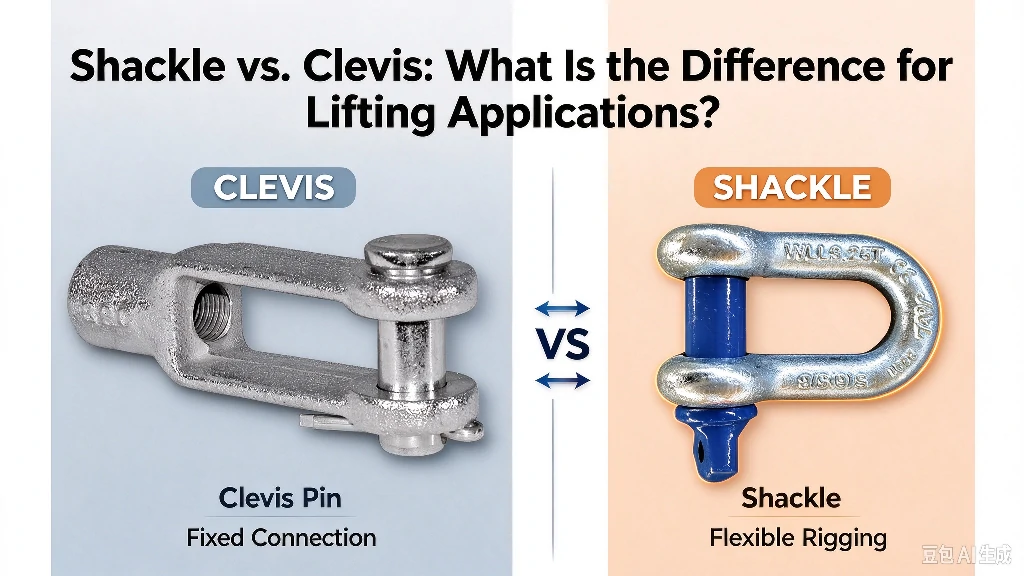
Shackle vs. Clevis: What Is the Difference for Lifting Applications?
Read moreA shackle and a clevis may look almost identical, but they serve different engineering purposes. A shackle is a dedicated connection component for rigging and lifting systems, while a clevis usually forms part of a mechanical assembly or provides a pivot connection. The difference becomes important when a connector must carry a suspended load. A […]
-

How Do Heavy Lift Beams Work on Offshore Drilling Ships?
Read moreHeavy lift beams on offshore drilling ships transfer lifting forces from the crane or hoist to the load through controlled load paths. They distribute the load between multiple lifting points, maintain the required sling geometry, and reduce unwanted bending or deformation in the lifted equipment. This makes them useful when a single lifting point cannot […]
-

What Lifting Beams Are Used by Cranes? A Practical Guide to Beam Selection
Read moreCranes use lifting beams, hoisting beams, and spreader-type lifting devices to connect the crane hook with loads that need controlled support at multiple lifting points. The right beam depends on the load weight, dimensions, center of gravity, lifting-point spacing, available headroom, and required load orientation. A compact lifting beam may suit machinery with defined lifting […]
-
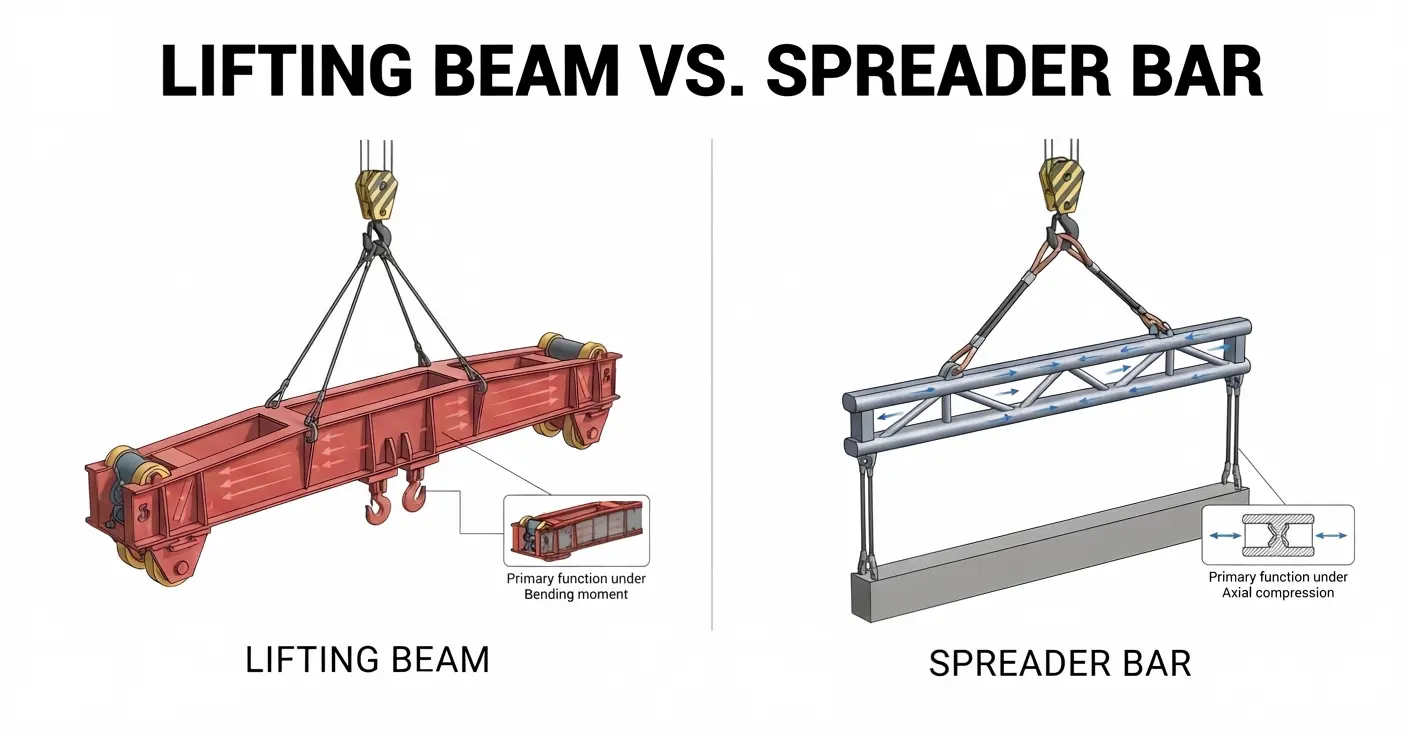
Lifting Beam vs. Spreader Bar: What Is the Difference?
Read moreLifting beams and spreader bars are both below-the-hook lifting devices, but they are designed for different load paths. A lifting beam primarily carries bending forces, while a spreader bar primarily carries compressive forces. This difference affects their rigging configuration, headroom requirements, weight, capacity, and suitable lifting applications. What Is a Lifting Beam? Lifting Beam Design […]