.png)


.png)


What Lifting Beams Are Used by Cranes? A Practical Guide to Beam Selection
September 17, 2026




Cranes use lifting beams, hoisting beams, and spreader-type lifting devices to connect the crane hook with loads that need controlled support at multiple lifting points. The right beam depends on the load weight, dimensions, center of gravity, lifting-point spacing, available headroom, and required load orientation. A compact lifting beam may suit machinery with defined lifting lugs, while a longer spreader arrangement can suit steel structures, pipes, and other wide loads. For industrial buyers, the important question is not simply whether a beam has enough capacity. The beam must also match the crane, rigging arrangement, load geometry, and intended lifting method.
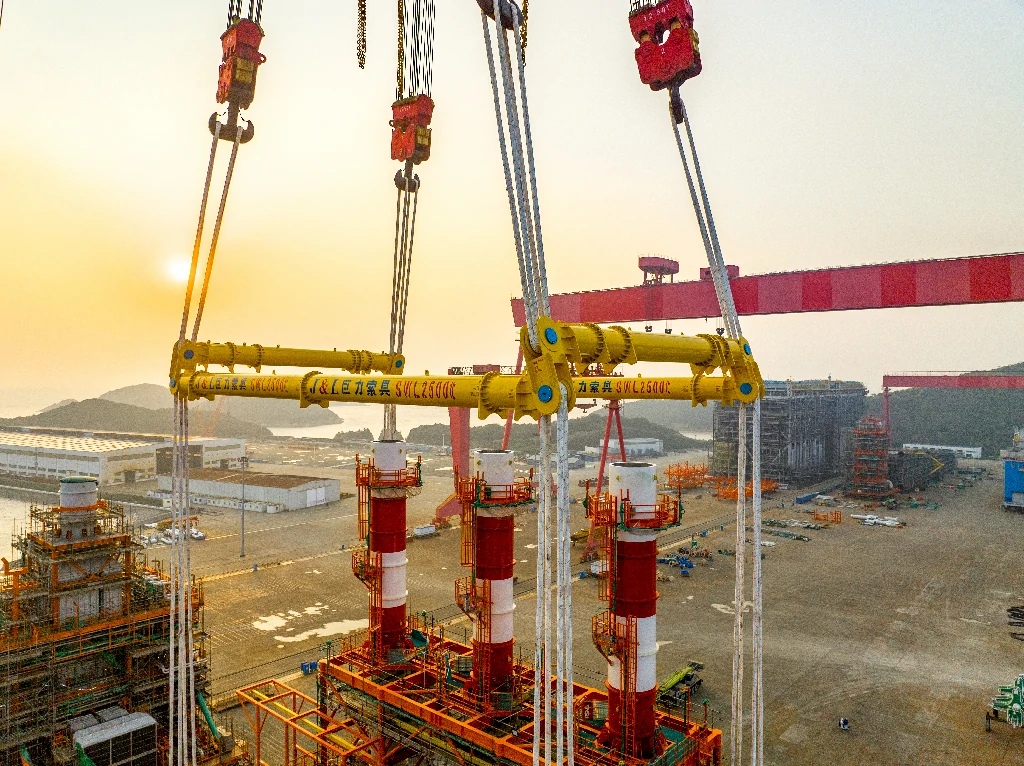
What Does a Lifting Beam Do in a Crane Lifting System?
A lifting beam is a below-the-hook lifting device positioned between a crane and the load. It provides engineered lifting points that help transfer the crane’s lifting force to the load through a controlled arrangement.
A basic crane lift may connect a hook directly to a sling or lifting lug. This approach works well for compact loads with suitable lifting points. Larger or irregular loads can create different challenges. The lifting points may sit far apart, the load may have an offset center of gravity, or direct sling connections may create unsuitable angles.
A lifting beam changes this geometry.
The crane connects to the beam through a top lifting point or upper rigging arrangement. The load then connects to lower lifting points through slings, shackles, hooks, or other approved components. This creates a defined load path between the crane and the load.
For example, consider a long steel frame with lifting lugs near both ends. Connecting both lugs directly to one crane hook may create steep sling angles and unwanted horizontal forces. A suitable beam can position the lower lifting points closer to the frame’s intended attachment locations.
The beam therefore helps solve a lifting geometry problem as well as a load-capacity problem.
The beam itself also becomes part of the suspended load. Its weight must be included when determining the total load carried by the crane. OSHA has addressed this point in its interpretations of crane lifting devices and suspended loads.
Typical Crane Applications
Lifting beams can be used for many industrial loads, including:
- Steel plates and fabricated structures
- Machinery and production equipment
- Pipes and cylindrical components
- Tanks and vessels
- Containers
- Concrete components
- Shipbuilding structures
- Wind-energy components
- Large frames and assemblies
- Industrial modules
The suitable beam configuration depends on how each load needs to be supported.
A machine with four lifting lugs may require a different arrangement from a 12-meter steel structure. A long pipe may need a different solution again because rotation and load stability become important.
What Types of Lifting Beams Are Used With Cranes?
Lifting beams can be designed in several configurations. Terms such as hoisting beam, spreader beam, lifting spreader, and lifting frame may also appear in supplier catalogs. Buyers should focus on the beam’s structural design, working load limit, and approved configuration rather than the product name alone.
Conventional Lifting Beams
A conventional lifting beam typically has an upper crane connection and multiple lower lifting points.
The crane connects to the top of the beam, while slings or other rigging connect the load to the lower points. The beam helps control the spacing and orientation of the load during lifting.
This configuration is commonly used for machinery, steel structures, and industrial equipment with defined lifting points.
Spreader Beams
A spreader beam sits between the crane and the load, with upper rigging connecting to the crane and lower rigging connecting to the load.
This arrangement can provide wider load attachment spacing and help keep lower sling legs closer to vertical.
Spreader beams are often considered for long, wide, or flexible loads where direct sling connections are less suitable.
Hoisting Beams
Hoisting beam is a broader term that may describe different engineered lifting configurations.
Depending on the design, a hoisting beam may function as a lifting beam, spreader-type device, or specialized lifting frame. Buyers should therefore confirm the working load limit, lifting-point arrangement, dimensions, and intended operating conditions.
Adjustable and Telescopic Beams
Adjustable or telescopic beams provide multiple approved lifting-point positions for loads with different dimensions.
They can be useful when a facility handles different machinery or fabricated assemblies. However, each position may have its own rated capacity and operating requirements.
Adjustability should therefore be treated as a defined engineering feature, not as unlimited flexibility.
Low-Profile Lifting Beams
Low-profile beams are designed for applications where vertical clearance is limited.
They can reduce the distance between the crane hook and load, which can be useful in workshops, factories, warehouses, and assembly areas with restricted headroom.
The complete lifting height should still include the crane connection, beam, rigging, and load.
How Do Load Geometry and Headroom Affect Beam Selection?
Capacity alone does not determine whether a lifting beam is suitable. Buyers also need to consider the load geometry, lifting-point arrangement, center of gravity, sling angles, and available headroom.
Load Weight and Working Load Limit
Start with the total suspended load, not the payload alone.
The lifting system must account for:
- Load weight
- Beam weight
- Slings
- Shackles
- Hooks
- Other suspended components
The beam’s working load limit must suit the actual lifting configuration. Crane capacity must also cover the complete suspended system under the planned operating conditions.
A 10-ton load therefore does not automatically require a 10-ton beam. The beam, rigging, and crane form one lifting system.
Lifting-Point Spacing and Center of Gravity
The beam dimensions should reflect the actual lifting points on the load.
For example, a steel frame with lifting lugs five meters apart may require a beam that maintains that spacing without creating unsuitable sling angles.
The center of gravity is equally important. Machinery, tanks, and fabricated assemblies may have uneven weight distribution. If the lifting points do not accommodate the actual center of gravity, the load can tilt after leaving the ground.
Load drawings and lifting-point dimensions are therefore important when specifying an engineered beam.
Sling Angles and Connection Geometry
Sling angles affect the tension within the rigging system. Shallower sling angles generally produce higher leg tension and greater horizontal forces at the attachment points.
Beam configurations can help control these forces by keeping lower sling legs closer to vertical.
The upper connection must also match the crane hook or intermediate rigging. Buyers should confirm rated capacity, dimensions, pin size, load direction, and required articulation.
Available Headroom
Headroom can determine the practical beam configuration even when the capacity is adequate.
Indoor cranes, production lines, machinery, and low-clearance work areas may leave limited vertical space between the crane hook and load.
In such applications, beam depth, connection height, sling length, and overall lifting height should be considered together. A low-profile beam may be appropriate when vertical clearance is the primary constraint.
Which Lifting Beam Configuration Fits Different Crane Loads?
The same lifting beam is not necessarily suitable for every load. The required configuration depends on the load’s dimensions, lifting points, weight distribution, and operating environment.
| Load Type | Main Selection Considerations | Potential Configuration |
| Long steel structures | Long lifting-point spacing, load stability | Long or fixed lifting beam |
| Pipes and bundles | Length, diameter, orientation, attachment points | Beam or spreader configuration |
| Industrial machinery | Offset center of gravity, multiple lugs | Multi-point or engineered beam |
| Tanks and vessels | Diameter, length, lifting lugs, structural strength | Engineered multi-point arrangement |
| Wide fabricated assemblies | Large spacing between attachment points | Spreader beam |
| Repeated production lifts | Consistent lifting points and routine handling | Dedicated lifting beam |
Long Steel Structures
Long frames and fabricated steel sections often have lifting points positioned near opposite ends.
The beam should maintain the required spacing while keeping the structure stable during lifting. The actual span should therefore be based on the load drawings rather than selected from capacity alone.
Pipes and Cylindrical Loads
Pipes can rotate or shift if the rigging arrangement does not control their orientation.
Selection should consider pipe length, diameter, weight, lifting points, and whether individual pipes or bundles are being handled.
For repeated handling, a dedicated configuration can provide more consistent positioning and rigging procedures.
Industrial Machinery
Machinery often has an uneven center of gravity. A pump skid, gearbox, motor assembly, or production machine may place substantially more weight on one side.
Multiple lifting lugs do not necessarily mean equal load distribution. The beam and rigging arrangement should reflect the actual load geometry and structural limitations.
Tanks and Vessels
Tanks and vessels may require multiple lifting points around the structure.
The lifting arrangement should account for vessel dimensions, weight, lifting-lug locations, and the forces transferred into the structure.
This becomes particularly important for thin-wall vessels or assemblies that could deform under unsuitable lifting forces.
Wide Fabricated Assemblies
Wide structures may require greater spacing between the upper and lower lifting connections.
A lifting spreader can be considered when the application requires a wider support arrangement or controlled load attachment points.
Repeated Production Lifts
When the same load is handled repeatedly, a dedicated beam can be designed around established lifting points and operating procedures.
This can make rigging more consistent and reduce setup variation between lifts. It also means inspection, maintenance, and configuration control become ongoing requirements.
What Should Buyers Specify Before Ordering a Lifting Beam?
A lifting beam manufacturer needs more than the required capacity to develop the correct equipment.
The following information provides a practical starting point.
| Specification | Information to Provide |
| Load weight | Maximum gross load weight |
| Load dimensions | Length, width, and height |
| Center of gravity | Location relative to lifting points |
| Lifting points | Number, type, and location |
| Beam span | Required distance between lower connection points |
| Crane | Crane type and rated capacity |
| Hook | Hook dimensions and connection details |
| Headroom | Available vertical clearance |
| Lift height | Required lifting and clearance height |
| Rigging | Sling, shackle, hook, or other connection type |
| Environment | Indoor, outdoor, marine, corrosive, or other conditions |
| Usage | Occasional or repeated lifting |
| Standards | Applicable project or regulatory requirements |
| Documentation | Drawings, inspection, testing, and other required records |
For custom requirements, contact Juli Sling with the load data, crane details, and preferred lifting arrangement so the beam can be evaluated around the actual application.
How Does a Rigging Spreader Beam Fit Into a Crane Lifting System?
A rigging spreader beam is one component within a complete lifting system.
The crane provides the lifting force. Upper rigging transfers that force to the beam. The beam then distributes the load through the lower rigging and load attachment points.
A rigging spreader beam can be useful when the load requires greater separation between lower lifting points.
Consider a long steel structure that has lifting lugs positioned several meters apart.
A direct sling arrangement from one crane hook could create steep sling angles. A spreader arrangement can position the lower connection points closer to the lifting lugs while keeping the lower sling legs more vertical.
The result can be a more suitable load path.
However, the complete arrangement still requires engineering review. Beam capacity, sling capacity, shackle capacity, lifting-lug capacity, and crane capacity all need to work together.
Example: Lifting an Eight-Ton Steel Frame
Suppose a fabricated steel frame weighs eight tons.
The frame has two lifting lugs near opposite ends. The crane has enough capacity for the total suspended load.
A suitable beam can connect to the crane and provide two lower connection points aligned with the frame’s lifting lugs.
The beam length should reflect the distance between the lugs. The design should also consider the frame’s center of gravity and structural strength.
The objective is not simply to hold eight tons. The objective is to create a controlled load path from the crane hook to the frame.
Example: Lifting an Offset-Weight Machine
Now consider a six-ton machine with four lifting points.
The machine’s motor and drive assembly place more weight toward one end.
A basic four-leg sling arrangement may cause the machine to tilt during the initial lift.
An engineered beam can help establish a controlled connection arrangement. The final configuration should account for the actual center of gravity rather than assume equal loading at every lifting point.
This example shows why capacity alone cannot determine the correct beam.
FAQ About Lifting Beams Used by Cranes
How do I choose the right lifting beam capacity?
Start with the maximum load weight and include the weight of the beam and other equipment carried by the crane. Then consider lifting-point spacing, center of gravity, sling arrangement, crane capacity, and the beam’s rated configuration.
Why does headroom matter when choosing a lifting beam?
The beam and rigging occupy vertical space below the crane hook. In facilities with limited crane height, a deep beam or long sling arrangement can reduce the available lifting height. A low-profile configuration may be more suitable.
Can one lifting beam lift different loads?
Some adjustable or telescopic beams support multiple approved configurations. Each configuration must have its own defined capacity and operating requirements.
What standards apply to lifting beams?
The applicable requirements depend on the project and jurisdiction. In the United States, ASME BTH-1 provides design criteria for below-the-hook lifting devices, while ASME B30.20 addresses areas including construction, marking, inspection, testing, maintenance, and operation.
Can a lifting beam be custom designed?
Yes. Custom beam design can address load dimensions, lifting-point spacing, headroom, crane connections, working load limit, and other project requirements. The manufacturer should receive accurate load and crane information before final design.